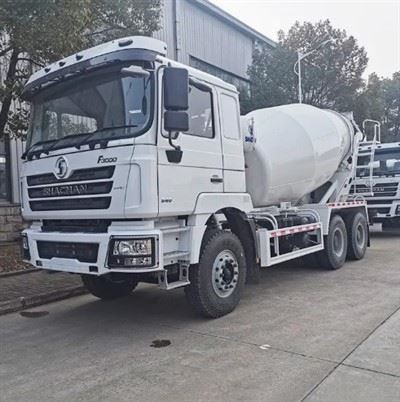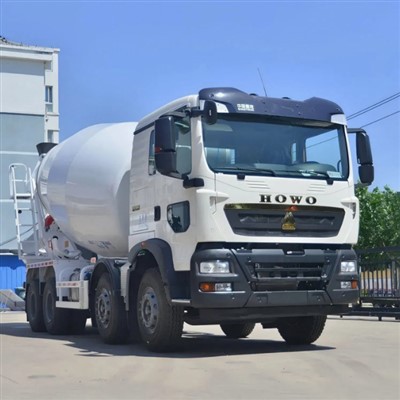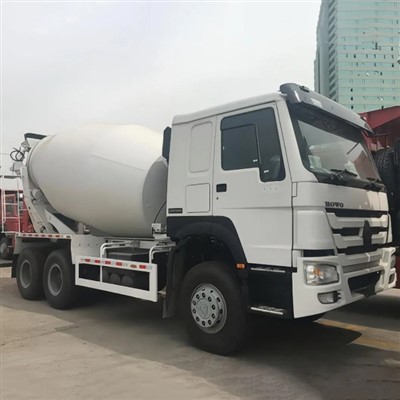
Product Overview
A truck-mounted concrete pump transports and places concrete efficiently on construction sites where conventional discharge methods are impractical. Integrating a concrete pumping system, a distribution boom, and a commercial truck chassis, this mobile unit supports concrete placement across building, infrastructure, and civil engineering projects.
The equipment provides articulated boom-based concrete distribution for foundations, elevated floors, structural columns, and reinforced concrete components. Operating range and placement performance depend on the selected boom configuration, pumping unit displacement, concrete mix design, delivery pipeline layout, site geometry, and operating procedures.
Model selection should be evaluated based on required concrete output, placement height and distance, site access, working conditions, and applicable local transport regulations. Procurement teams should verify model-specific technical data sheets, operating envelopes, chassis specifications, and safety systems prior to finalizing equipment orders.
-
![42m Concrete Pump Truck]() 42m Concrete Pump TruckThis 42m concrete pump truck is a high-performance and versatile machine designed for modern construction projects. It is equipped with a 42m four-section folding boom that offers excellent reach,
-
![45m Concrete Pump Truck]() 45m Concrete Pump TruckThe 45 meter concrete pump truck is a highly efficient and versatile construction machine widely used in medium and high-rise buildings, bridges, roads, tunnels, and municipal engineering projects.
-
![48m Concrete Pump Truck]() 48m Concrete Pump TruckThe 48 meter concrete pump truck is a high-performance and widely used construction machinery, specially designed for medium and high-rise buildings, bridges, highways, tunnels, and large-scale
-
![52m Concrete Pump Truck]() 52m Concrete Pump TruckThe 52m concrete pump truckis a high-end construction equipment specially designed for high-rise buildings, large-span bridges, and large-scale infrastructure projects. As a core device for
-
![56m Concrete Pump Truck]() 56m Concrete Pump TruckThe 56m concrete pump truck is a high-performance, large-scale construction equipment specially designed for high-rise buildings, large-span bridges, and large-scale infrastructure projects. As a
-
![63m Concrete Pump Truck]() 63m Concrete Pump TruckThe 63m concrete pump truck is a high-end and large-scale construction equipment, which is widely used in large-scale infrastructure projects such as high-rise buildings, long-span bridges, and urban


Key Features & Benefits
Integrated Pumping and Boom System: Combines the concrete pumping unit and articulating distribution boom on a single mobile chassis for rapid site deployment and structured placement across designated working areas.
Configurable Boom Reach: Multiple boom folding arrangements (such as Z-fold and multi-section configurations) accommodate varying construction layouts, vertical reach requirements, and unfolding height clearances in confined urban spaces.
Closed-Loop Hydraulic Pumping System: Driven by variable displacement axial piston pumps and proportional control valves, the hydraulic circuit delivers responsive stroke switching, smoother reversing shocks, and controlled energy consumption.
Wear-Resistant Pumping Elements: Hard-chromium plated concrete cylinders paired with tungsten carbide wear plates and cutting rings are engineered to extend maintenance intervals when handling abrasive aggregate mix designs.
Adaptive Outrigger Footprint: Telescopic and X-type outriggers equipped with integrated ground-contact and extension monitoring sensors help maintain machine stability across restricted setup zones.
Operational Monitoring and Controls: Centralized control interface featuring real-time diagnostic indicators, system pressure tracking, and proportional radio remote control options for precise operational feedback.
Applications
Truck-mounted concrete pumps are deployed across diverse construction environments, with performance governed by model capacity and operating parameters:
Commercial and Residential Buildings
Concrete placement for floor slabs, structural columns, load-bearing walls, and elevated beams.
High-Rise Construction
Vertical concrete distribution to elevated storeys within the verified pressure and pumping capability of the equipment configuration.
Foundation Engineering
Large-scale concrete placement for mass foundations, pile caps, thick retaining structures, and heavy industrial footings.
Road and Bridge Projects
Concrete delivery for bridge decks, highway viaducts, tunnel linings, and civil engineering infrastructure where the truck can achieve a stable setup position.
Technical Specifications
|
Parameter |
Specification Reference |
|
Product Type |
Truck-Mounted Concrete Pump |
|
Model Designation |
Determined by configuration (e.g., 37-meter to 62-meter class) |
|
Maximum Vertical Boom Reach |
Verified by model-specific working envelope diagram |
|
Maximum Horizontal Boom Reach |
Verified by model-specific working envelope diagram |
|
Theoretical Concrete Output |
Dependent on pumping cylinder diameter and stroke frequency |
|
Maximum Concrete Pumping Pressure |
Dependent on rod-side and cap-side hydraulic circuit switching |
|
Concrete Delivery Pipeline Diameter |
Standard 125 millimeters (wear-resistant specification) |
|
Boom Configuration |
Multi-section Z-fold or articulated folding arrangement |
|
Hydraulic Main Pump |
Variable displacement axial piston pump configuration |
|
Truck Chassis Platform |
Commercial heavy-duty truck chassis (axle configuration varies by model) |
|
Emissions Compliance |
Regional standard compliance options available |
Reliability in heavy mobile machinery depends on controlled fabrication, assembly, and verification processes:
Structural Fabrication: Boom arms, subframes, and outrigger structures are produced from high-strength structural steel plates processed via CNC fiber laser cutting and welded using robotic MIG/MAG stations to maintain dimensional control.
Weld Inspection: Primary load-bearing structural welds undergo non-destructive testing, including ultrasonic testing (UT) and magnetic particle inspection (MT).
Surface Protection: Steel components undergo abrasive centrifugal shot blasting to prepare surfaces for application of epoxy zinc-rich primer and polyurethane topcoats resistant to alkaline slurry and weathering.
Hydraulic Testing: Completed pumping units undergo functional pressure and displacement testing on test benches to verify valve response and pressure holding under load.

Customization & OEM Services
Equipment configurations can be adapted to align with regional operating environments and project requirements:
Chassis Integration
Adaptable to customer-specified commercial truck chassis platforms, taking into account local road regulations, axle-load distribution limits, and gross vehicle weight rating (GVWR) compliance.
Boom and Outrigger Tailoring
Selection of boom folding geometries and outrigger footprints to match restricted job-site access or specific urban setup constraints.
Control Interface
Adaptation of human-machine interface (HMI) display languages, CAN-bus communication protocols, and radio remote control frequencies to destination market standards.
Related Products & Spare Parts
Pumping Consumables
Hardened concrete delivery pipes, rubber elbows, and high-pressure hose sections.
Wear Components
Tungsten carbide wear plates, cutting rings, and S-valves.
Hydraulic & Pumping Maintenance Parts
Concrete delivery cylinders, piston seals, hydraulic filter elements, and valve maintenance kits.
Frequently Asked Questions
We're well-known as one of the leading boom concrete pump truck manufacturers and suppliers in China, featured by quality products and good price. Please rest assured to buy advanced boom concrete pump truck made in China here from our factory. Contact us for more details.
Diesel arm concrete pump truck, 52m Concrete Pump Truck, truck-mounted concrete pump